
Gas Storage Wellbore Diagramming
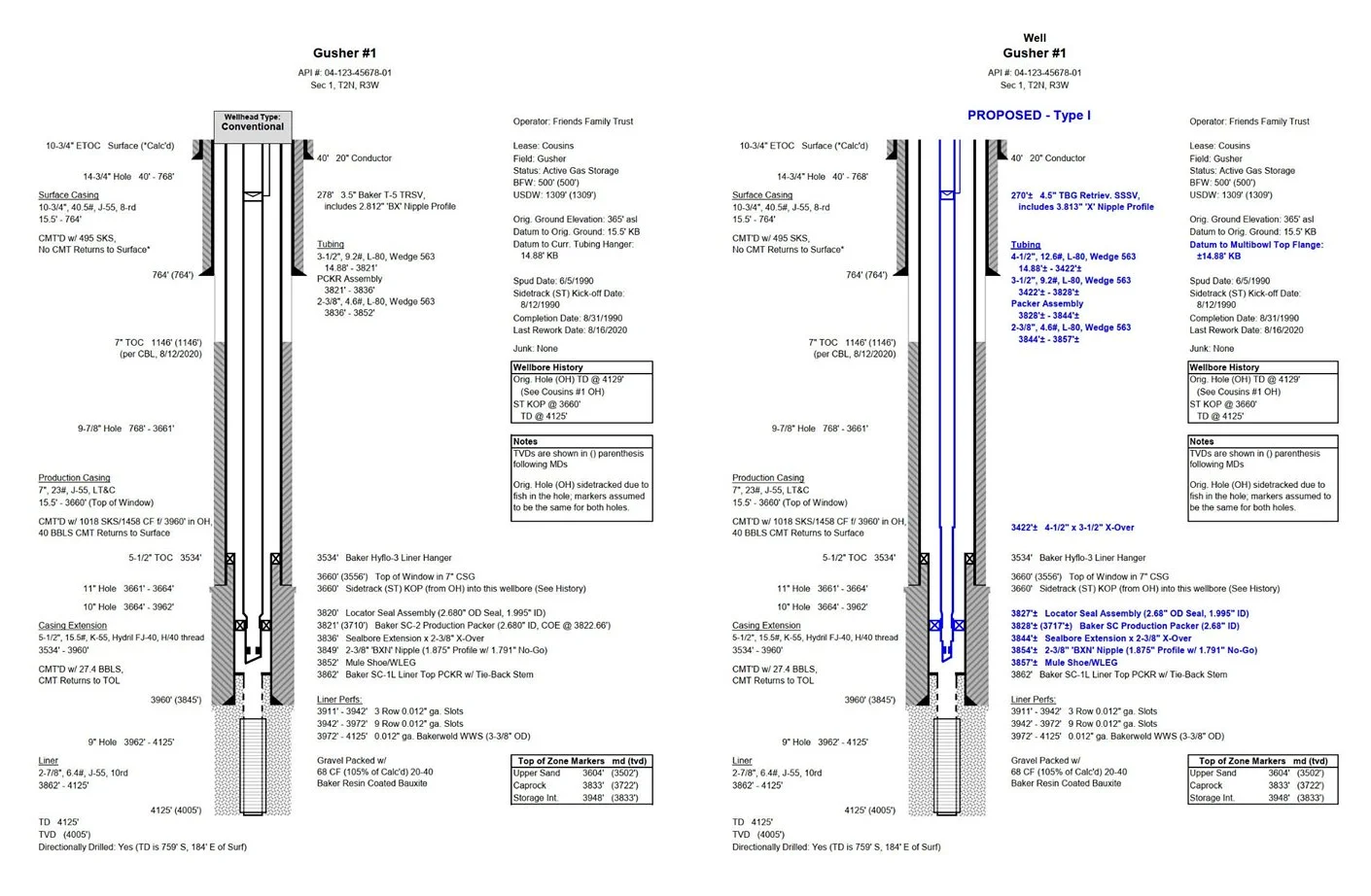
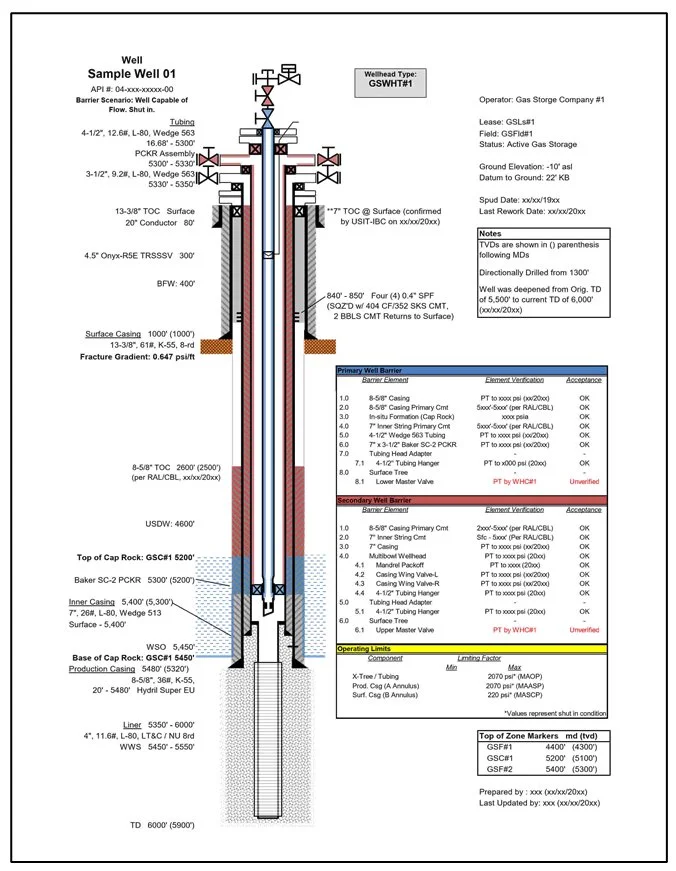
Beacon West staff have extensive experience preparing wellbore diagrams for gas storage wells. The wellbore diagrams serve as a valuable tool to aid in the planning and execution of well operations, including drilling, completions, workovers, and abandonment and are an essential part of CalGEM Notices of Intent (NOIs). They provide a visual and chronological outline of a well’s structure, history, and operational status and include components like casing, tubing, plugs, and perforations, as well as the location of geologic formations and underground water sources. In addition to well components, Beacon West wellbore diagrams include detailed top of cement (TOC) calculations per CalGEM regulations. These require that precise depths, volume, and cement type (including additives) be determined and reported for engineering approval and record keeping.
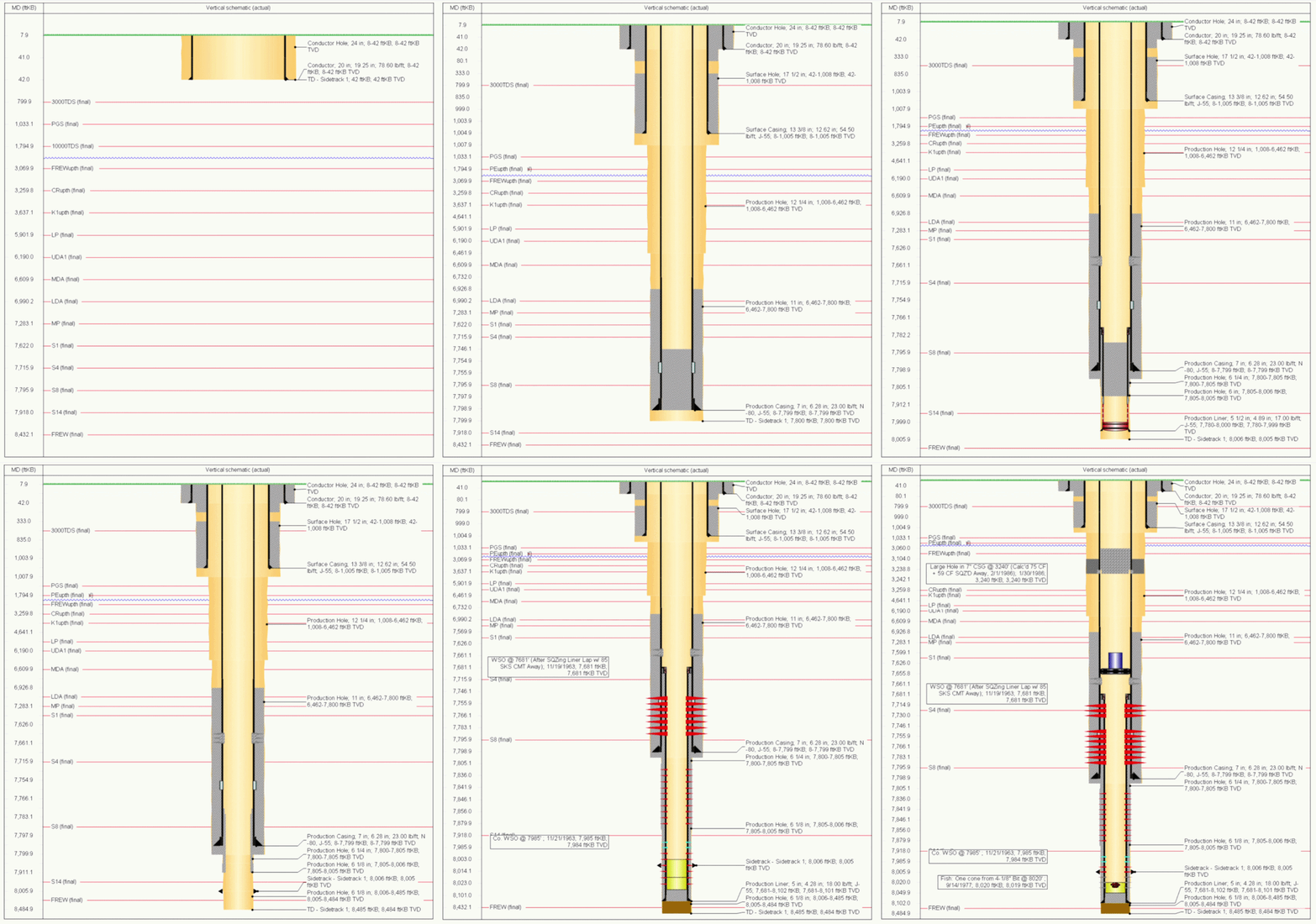
Beacon West staff are managing a multi-year wellbore diagramming effort to electronically capture information contained in historical gas storage well files and well records to “digitize” historical drilling, abandonment, and workover information in Peloton’s WellView® software. This digitized data is used in the planning, completion, testing, and workovers of gas storage wells. Using WellView® and Beacon West’s data entry and management methodology, our client is now able to accurately build, review, and efficiently maintain up to date diagrams and well information for more than 500 wellbores. The final product provides a chronological view of a well’s lifecycle from initial drilling to current status, whether it is decommissioned, idle, or active. This allows for quick responses to both regulatory and management data requests, and provides current well construction diagrams that meet regulatory standards, increasing operational and engineering efficiency.
